


Featured Speakers and Presentations

Matthew Winden

The Economic Benefits of Conservation
Dr. Winden is Associate Dean and Professor in the College of Business and Economics at the University of Wisconsin-Whitewater. Before taking on his current role, he was the Chair of the Economics Department and Assistant Director of the Fiscal and Economic Research Center. His research is in environmental and natural resource economics issues and focuses on estimating dollar values for environmental impacts that are not priced in markets. He teaches courses in economic theory, resource and environmental economics, and quantitative methods at the undergraduate and graduate levels. Dr. Winden earned his PhD from The Ohio State University.

Yoel Stuart

eDNA Data from the Fox River
Methodological advances have made Environmental DNA (eDNA) a cheaper, simpler, non-invasive way to document biodiversity. By sequencing genetic material released by organisms in the wild, we can match eDNA to reference sequences to detect species. eDNA does as well or better than conventional approaches in most aquatic systems, so managers and policy makers recognize eDNA metabarcoding as a powerful component of conservation programs. However, eDNA approaches are only as good as the available reference sequences. The development of comprehensive reference databases is therefore critical to advancing conservation outcomes. My team and I are building a publicly available eDNA reference database of complete mitochondrial genomes for all Illinois fish species. This will be an exponential increase in eDNA infrastructure useful to monitor fish species in Illinois, the Great Lakes, and the Mississippi Basin, contributing to conservation efforts to find rare species, detect invasive species, and protect species of concern. While building this resource, we are also conducting an eDNA survey of the Fox River to assess fish diversity in a key Illinois watershed. In Summer 2025, we sampled eDNA from ~50 sites on the Fox and its tributaries. These sites match the sites surveyed by IDNR every five years using traditional fishing techniques. We will compare our findings to IDNRs to further understand the ways in which eDNA can improve biodiversity monitoring. We also collected eDNA above and below 10 dams on the Fox, to set a baseline for the fish communities there, to track how communities respond to planned dam removal.
Dr. Stuart studied intertidal barnacles as an undergraduate at UC Davis, Anolis lizards as a graduate student at Harvard, and modern populations of threespine stickleback fish as a postdoc at UT Austin. He has been a professor at Loyola University Chicago since 2019, where his lab has focused most on a fossilized population of threespine stickleback. His general interests are in the speed and repeatability of evolution in response to environmental change, though his lab is beginning to find ways to help respond to the ecological crises of the Anthropocene.

Gary Swick

The State of the Fox 2026
Where Were You for It's Our Fox River Day 2025
Friends of the Fox River President, Gary Swick, will provide an overview of the many projects and happenings along the the Fox River from the headwaters to is southern confluence. Gary will also review the annual watershed-wide celebration, It's Our Fox River Day.
Gary Swick used his BS in Natural Resource Mgt. from the University of Wisconsin – Stevens Point and a MSEd in Outdoor Teacher Education as the foundation for developing a field-based High School Environmental Science suite of eight courses. Under his direction, students planted thousands of trees, restored acres of natural areas, generated files of research, and accomplished many other acts of environmental stewardship that have become local history. Many of those students are now professionals in the environmental field. In addition, he also invested 10 years at Northern Illinois University as an instructor, and 18 summers as a raft guide on the Snake River in Wyoming.
Gary serves as the President of the Friends of the Fox River and is a board member on several other non-profit conservation groups. He is an avid outdoor recreationist.

Mila Marshall

Protecting What We Share:
Relationship-Driven Strategies for Advocacy Success
Advocacy works best when it’s personal, persistent, and purposeful. In my work as a Clean Water Advocate with the Illinois Sierra Club, I’ve seen firsthand how connecting with people where they are, whether policymakers, community members, or neighbors can transform understanding into action. But advocacy can also be exhausting, and it’s easy to feel like one voice isn’t enough. That’s why sustaining your efforts, even in small, consistent ways, is so powerful: every comment, conversation, and meeting adds up. And when we combine connection with persistence, we win protecting waterways, wetlands, and communities, sometimes in ways that seem small at first but ripple far beyond. I will be sharing strategies and examples from my experience that will help you connect, sustain, and win in your own advocacy.
Mila holds a PhD in ecology and works to mobilize and energize diverse networks across Illinois around clean water issues related to wastewater, agriculture and industry. She advocates for novel partnerships that protect the quality of streams, lakes, rivers, and Illinois tributaries for all. Furthermore she addresses the legacies of water infrastructure disinvestment by building bridges towards solutions through connecting and educating the scientific and legislative communities at the city, county and state levels. She serves as the Clean Water Advocate for the Illinois Sierra Club Chapter, is the CEO of the Chicago Area Waterways Heritage Committee, President of the Black Women Boaters Club - Chicago Chapter and editor at Chicago News Weekly. Finally Dr. Marshall serves the State of Illinois as a member of the Groundwater Advisory Board and Natural Resources Advisory Council.

KC Carter

Assessing Habitat Value for Bumble Bees: Distribution Patterns, Foraging Behavior, and Plant–Pollinator Networks in Northern Illinois
Urbanization reshapes floral resource availability, potentially altering bumble bee distribution, foraging decisions, and bumble bee–plant network structure. Assessing habitat value for bumble bees requires integrating patterns of occurrence with behavioral and interaction-based measures of resource use. Research conducted across an urbanization gradient in the Chicago Region evaluates how landscape context influences bumble bee abundance, species composition, and foraging behavior in relation to floral resource quality. Field surveys quantify floral abundance and nutritional traits, alongside observations of bumble bee visitation. Network analyses characterize bumble bee–plant interactions to assess changes in overall structure and the roles of plant species across sites. Integrating distribution patterns, foraging behavior, and network structure provides a more comprehensive framework for assessing habitat quality for bumble bees and guiding pollinator conservation in human-dominated landscapes. The presentation will provide an overview of habitat assessment protocols and survey methods used to inform Section 7 Consultation with the U.S. Fish and Wildlife Service within the Tollway corridors in northern Illinois. Management recommendations for landowners and conservation practitioners will highlight strategies that enhance high quality floral resources and support resilient bumble bee–plant networks across habitats ranging from highly disturbed urban to remnant landscapes.
KC Carter, Pollinator Ecologist in the Population and Community Ecology Lab at the Illinois Natural History Survey, investigates pollinators, foraging behavior, and resource selection in transportation corridors in northern Illinois. KC’s research uses biochemical analysis of pollen and nectar with DNA metabarcoding to identify the plants bees visit across different species, habitats, and seasons.

Tommy Gunn

The ABC’s of RCPP
Oak Conservation for Private Landowners
Learn about the partnership between the American Bird Conservancy, the Natural Resource Conservation Service and several other conservation organizations working collaboratively to address the loss of oak habitats in Southeast Wisconsin and Northeast Illinois. We will explore the why, how and results of this ongoing project that works with private landowners to improve these habitats.
Tommy graduated from Southern Illinois University studying Forestry and has worked as a Forester for The Nature Conservancy in Indiana, for the Colorado State Forest Service, and has also worked as a consulting forester. In Tommy’s role with ABC, he works in partnership with the USDA Natural Resources Conservation Service as a forester for the Oak Ecosystem Regional Conservation Partnership Program (RCPP). He provides technical knowledge and assistance to private landowners, foresters, and partners, improving oak ecosystems to benefit focal bird species.



Dave Marshall


Underwater Habitat Investigations, LLC
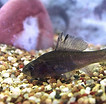
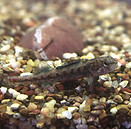
Reconstructing Historical Nearshore Nongame Fish Assemblages in Southern Wisconsin Glacial Lakes
Scattered across the landscapes of northeastern Illinois and southeast Wisconsin are glacial lakes that support remnants of a once diverse nearshore assemblage of nongame fishes. Water quality remains favorable in most of these lakes since the calcareous geology helps sequester phosphorus inputs that increased after European settlement changed the landscape. Lake management planning rarely mentions the many nongame fish species that previously inhabited or have declined in these lakes. When nongame fish are mentioned, priorities remain focused on phosphorus and recreational uses. The importance of nongame fish and their ecosystem services are generally not recognized or prioritized. Reconstructing and highlighting historical nongame fish assemblages and better understanding what remains and what has been lost may increase public awareness and expand lake management goals to include this important function in lake ecosystems.
Dave received a BA degree at UW-Milwaukee in 1975 with a major in Biological Aspects of Conservation and Limnology and Fisheries emphasis. He worked for Wisconsin DNR from 1976 to 2006 in the Water Resources Management and Fisheries & Habitat Protection programs. Upon retirement Dave established Underwater Habitat Investigations LLC specializing in nongame fish distribution surveys and conservation aquaculture.
Nitrate pollution and expansion of free-floating plants in 3 lower Wisconsin River oxbow lakes
Conserving the Starhead Topminnow (Fundulus Dispar) in Wisconsin: Part 2 Conservation Aquaculture
Should We Care About the Little Fish in Our Lakes?
Conserving the Starhead Topminnow (Fundulus Dispar) in Wisconsin: Part 3. Re-Establishment Success!

Steve Byers


John Peters
Nippersink Creek
Rebirth and Renewal
The McHenry County Conservation District (MCCD) initiated rebirth of Nippersink Creek at Glacial Park with the first ever “stream re-meandering” project” in 1999. John Peters with the MCCD staff will describe how the original flow path of the then ditched Nippersink Creek was restored in this hallmark project. Building upon this success, John will describe several additional stream restoration projects at Glacial Park, culminating in 2025 with closing the last ditched section of Nippersink Creek, removing a water control structure, and creating a new 1100-foot meandering outfall to Pickerel Creek Marsh. In 2023, Friends of Hackmatack National Wildlife Refuge (FOHNWR) received a $975,000 Community Project Funding Grant from Congresswoman Underwood to restore a large wetland basin located on a 165-acre tract of land bordering Glacial Park that drained directly into Nippersink Creek. Steven Byers will use a series of dated aerial photographs to illustrate changing land use patterns over the last 75 + years and how the hydrology of the site has been altered by installation of field drain tiles and excavation of a ditch that drained the site. He will also explain why this project, located within the footprint of Hackmatack National Wildlife Refuge, was considered a viable Community Project and outline steps being taken by FOHNWR to restore the wetland basin on this property.
John Peters is the Restoration Ecology Manager with the McHenry County Conservation District with over 35 years of experience in ecological restoration and land management. He holds a bachelor’s degree in biology from Knox College with a focus on ecology, zoology, and prairie reconstruction, John specializes in habitat restoration, has led large-scale habitat restoration projects, advanced GIS-based ecological monitoring, and presented at numerous professional conferences, earning recognition for his leadership and expertise in prescribed burning and native plant community management.

Steven Byers currently serves as the Chair of Friends of Hackmatack NWR. For 29 years, Steven was a Field Representative for the Illinois Nature Preserves Commission - responsible for protection and stewardship of over 100 Nature Preserves in northeastern Illinois. Steven earned a M.S. in Wildlife Ecology from Iowa State University and has served as President of the Illinois Chapter of The Wildlife Society and the Fox Valley Land Foundation. Steven retired from the U.S. Army Reserve after 37 years with the rank of Colonel and responsibilities as Chief of Staff, 330th Medical Brigade. Steven received the Cyrus Mark Conservation award from The Nature Conservancy for helping preserve Bluff Spring Fen Nature Preserve and has been recognized by the U.S. Department of Interior as a recipient of the “Partners in Conservation Award” for his role in helping establish Hackmatack NWR.

Brandie Dunn
.png)
Fireflies: Precious Jewels of the Night
They light up our summer evenings and create a sense of wonder and awe. Xerces Society Ambassador, Brandie Dunn, will shed some light on the enchanting world of fireflies. Learn about their life histories and threats they face. Leave inspired to adopt simple actions that can be taken to help conserve them. Every step adds up to brighten the future for these charismatic and universally beloved creatures. The Xerces Society for Invertebrate Conservation is an international nonprofit organization that protects the natural world through the conservation of invertebrates and their habitats.
Brandie was honored to become a Xerces Society Ambassador in 2022 and join them in their mission to engage and inspire people to establish meaningful connections with invertebrates. At home, she has prioritized native gardening practices which have brought more sparks of life to the neighborhood that extend far beyond fireflies to include endangered rusty-patched bumble bees.
As a Wisconsin & Illinois Master Naturalist, she volunteers in many different capacities in her church and community to cultivate partnerships which promote conservation, restoration, education, and connect people with the land.

Mike Kies


Paddle for Parks:
2025 Fabulous Fox
National Water Trail Challenge
The Fabulous Fox National Water Trail Challenge was a powerful expression of river stewardship, as Michael Kies and Wally Werderich set out to canoe the entire length of the Fox River in one continuous journey from headwaters to confluence. Covering more than 188 miles, their journey required endurance, focus, and adaptability, mirroring the long-term commitment needed to care for open space, parks and waterways.
Michael Kies is an administrator, coach, and athlete with a diverse background spanning park and recreation leadership, professional basketball, and ultra-endurance sports. In his professional career, Kies serves as the Superintendent of Recreation for the St. Charles Park District. He previously held the position of Director of Recreation and Facilities for the Hoffman Estates Park District, where his leadership was instrumental in the district receiving the National Recreation & Parks Association (NRPA) Gold Medal Award, the highest honor in the industry. Michael holds a B.S. in Recreation Administration from Elmhurst University and an MBA from Webster University, in addition to being a Certified Park & Recreation Executive (CPRE). He is an active leader in his field, currently serving as Vice Chair of the National Gold Medal Award Committee for the American Academy of Park and Recreation Administration (AAPRA).

Wally Werderich

Brian Smetana
Protecting Delavan Lake with Partners
Success in the Delavan Lake Watershed was in part because of Partnerships. This presentation will explain how partners helped with getting Best Management Practices installed in the watershed to improve water quality. It will also include looking at practices installed and the estimated nutrient reduction that has been achieved.
Brian Smetana has worked for Walworth County Land Conservation Department for almost 40 years. Although he had a variety of duties, his specialty was working with landowners in implementing Best Management Practices to improve water quality. Recently retired he has returned to Walworth County as a part time employee to continue his conservation passion.

Thomas Slawski

Surface Water Chloride Conditions
and Trends in Southeastern Wisconsin
This presentation will summarize the historical (1960s-present) and existing conditions and trends in chloride concentrations in surface water streams and lakes as part of the Commission’s Chloride Impact Study. This talk presents key findings of Technical Report No. 63 (see more here at sewrpc.org/Regional-Planning/Chloride-Study) which goal was to determine the extent waterbodies in the study area have been impacted by chloride pollution and to what degree chloride conditions in these waterways are improving, becoming worse, or remaining stable. This information combined with classification data such as watershed size, percent composition of urban and rural land uses, and land use changes over time were included in this analysis.
These data and trends presented will provide a basis for understanding existing surface water chloride conditions, geographical distribution, and progression of chloride concentration changes throughout the study area. Such data will help determine where to intervene, provide a basis for management goals, and a baseline to assess changes in practices that introduce chloride to the environment. This talk will provide a basis to assess the existing and potential consequences of increasing concentrations of chloride in surface waters on the physical, chemical, and biological integrity of ecosystems and the structural integrity of infrastructure in the study area.
Thomas Slawski has over 30 years of experience in aquatic ecology specializing in stream habitat and fisheries assessments, design, and restoration techniques. He has received a B.S. Biological Sciences, University of Michigan-Ann Arbor, in 1991, and Ph.D., Biological Sciences, University of Wisconsin-Milwaukee, in 1997. He has been employed at the Southeastern Wisconsin Regional Planning Commission since 1998 and currently holds the position of Chief Biologist of the Natural Resources Planning and Management Division, which specializes in wetland delineation and primary environmental corridor assessments, natural areas and critical species habitat protection, as well as lake and stream management/restoration planning.

Jim Stute

Cover crops, pay or not?
Fear of negative financial outcomes remains the major barrier to widespread cover crop use, despite availability of numerous cost-share programs to support the practice and ease farmers’ financial burden. Nonusers suggest they need to see hard economic data generated from farms and collected by an independent entity to compel them to reconsider cover crop use. To build the business case for cover crop adoption, we conducted a 3-year on-farm trial to collect the economic data and identify practices which contribute to most to financial return.
This session will present the results, examining the successful practices leading to the top 25% of responses while evaluating the use of cost-share to ensure a positive financial return with an emphasis on rental cropland
Stute is a farmer-member of the WPCRC and an independent research agronomist. His research and outreach focuses on developing best practice recommendations for regenerative agricultural systems to maximize financial returns, encouraging adoption by farmers. This work is conducted entirely with cooperating farmers in Southeast Wisconsin and focuses on the cornerstone practices of no-till and cover cropping. Past affiliations include UW-Extension and the Michael Fields Agricultural Institute, and he’s spent the last 35 years working to increase cover crop use

Karen Ann Miller


Jeff Mengler

Fabulous Fox! National Water Trail
Access Infrastructure Project
In the summer of 2025, Kane County, Illinois constructed five Universal Design access sites along the Fox River funded by the American Rescue Plan and the Illinois Department of Economic Opportunity. Karen Ann Miller, AICP, Executive Planner and Project Manager for the Kane County Development Department and Jeff Mengler, PWS, Senior Project Scientist and Engineering Consultant with Hey and Associates, Inc. will explain the process to provide additional universal access to the Fabulous Fox! National Water Trail in five different communities along the Fox River in Kane County.
Respect and love for nature inspires and motivates Karen Ann Miller to regularly explore local open spaces and plan longer trips that include hiking and paddling while learning about local culture. She has been fortunate to be employed as a Land Use Planner by Kane County, Illinois, a county that values its natural resources, for over 25 years. Karen is the Illinois Co-Chair of the National Park Service designated Fabulous Fox! National Water Trail, board member of the Fox River Ecosystem Partnership, and co-chair of the Chicago Region Trees Initiative Trees & Green Infrastructure Working Group. She is a member of the American Institute of Certified Planners, a commissioner for the Brookfield Planning and Zoning Commission and active in the Brookfield Historical Society. Master of Urban Planning and Policy, University of Illinois at Chicago; Bachelor of Arts, Psychology, Northern Illinois University
Mr. Jeffrey Mengler is Senior Project Scientist at Hey and Associates, Inc. and has 40 years of professional experience in natural resources. He has worked with private, non-profit, and government organizations in the research, management, restoration, protection, and assessment of Midwestern ecosystems. Mr. Mengler began his career in the research department at the Morton Arboretum, and after a brief stint in consulting, worked as a senior biologist in the U.S. Fish and Wildlife Service’s Chicago Ecological Services Field Office for 18 years. Mr. Mengler re-entered consulting in 2010. Since joining Hey and Associates, Inc., he has become an integral part of an interdisciplinary team approach to many projects. He continues to serve in several leadership roles with conservation organizations in the Chicago region including as president of the Fox River Ecosystem Partnership. He holds a B.S. and M.S. in Biological Sciences from Northern Illinois University and is a certified Professional Wetland Scientist (PWS).
A short video for the new launches along the FFWT

Art Malm

Fox River Valley Dam Removal
Art Malm is an independent retired civil and environmental engineer, having more than five decades of experience of water supply and water pollution control in both the public and private sectors.
Art’s specific views on dam removal in the Fox River Valley, developed over the past ten years, are colored by ecology, economics and engineering science. A graduate of Cornell University, Art has served as a trustee of the Fox River Water Reclamation District and is an active board member of the Fox River Study Group and Friends of the Fox River.
The program will be designed to provide a basic framework of the dam removal issue and status of the program in the Valley, address common misconceptions, and allow plenty of time for audience Q&A.

Brian Miner

Aquatic Plant Management in High Quality Waters
& Wetlands in the Mukwonago River Watershed
The Nature Conservancy (TNC) has been managing aquatic vegetation in Lulu Lake, Pickerel Lake, and their surrounding wetlands since 2000. TNC has used an integrated approach, working with researchers and partners to combine mechanical treatments with novel approaches to promoting native plant regeneration. Brian Miner will give an overview of TNCs aquatic plant management and share recommendations from the recently updated Pickerel Lake Aquatic Plant Management Plan.
Brian Miner is the Southeast Wisconsin Stewardship Coordinator with The Nature Conservancy. He has worked in the Mukwonago River Watershed since 2017 and leads TNC land management efforts across southeast Wisconsin. Prior to working with TNC, Brian worked with conservation crews across the country doing work ranging from trail building in Maine to forest restoration in Arizona and Colorado.

Eric Hettler

Fox-Illinois TMDL: Findings and Approaches to Reduce Nutrients and Sediment
The Fox–Illinois (FOXIL) TMDL study began in 2022 to better understand nutrient and sediment sources in the basin and provide information to support efforts to improve water quality. The project is approaching completion and has revealed key factors contributing to pollution in Wisconsin’s rivers and streams. This presentation will share the main findings from the TMDL and highlight opportunities and challenges for reducing pollution, including practical strategies for reducing nutrients and sediment on cropland.
Eric Hettler is a water quality modeler at the Wisconsin Department of Natural Resources, where he has worked for the past seven years. His work supports studies that identify pollutant reductions needed to improve water quality and meet clean water targets in Wisconsin’s rivers and lakes. Eric has served as the lead modeler and co-project manager for the recent Fox–Illinois River Basin TMDL.

Jacob Jozefowski

Sharene Gould Dulabaum

Fox River Watershed-Based Planning Efforts
in Lake County, Illinois
Watershed-based plans are an important tool for addressing water related issues in communities. The planning process is a collaborative effort between all watershed stakeholders, including government agencies, environmental interest groups, landowners, recreational users, and any individual interested in the watershed’s resources, to identify water quality and quantity concerns and solutions. During this presentation, Lake County Stormwater Management Commission staff will discuss their recent watershed-based planning efforts and project implementation in the Fox River Watershed.
Jacob has worked as a Water Resource Professional at the Lake County Stormwater Management Commission since 2017, developing watershed-based plans and performing grant and project management. Before taking their current role, Jacob performed stream and beach water quality monitoring for the City of Racine Health Department Laboratory. Jacob has a BS in Environmental Geosciences from the University of Wisconsin - Parkside and a MS in Freshwater Sciences and Technology from the University of Wisconsin – Milwaukee.
Sharene has worked as a Water Resources Professional at the Lake County Stormwater Management Commission since 2024. She provides support to the capital improvement program, performs grant management and administration, and assists with public education and outreach. She also supports watershed planning and serves on the Lake County Green Team. Sharene holds a BA in Biology and Political Science from Grinnell College and is a Certified Floodplain Manager (CFM).


Susanne Masi
Carpenter Dam Botanizing
Susanne Masi was a botanist at the Chicago Botanic Garden for 22 years, where she co-founded and managed Plants of Concern, a citizen science-based rare plant monitoring program. She served on the Illinois Native Plant Society Board from 2014-2025, and as its Vice President from 2020 through 2025. Susanne also served on the Illinois Endangered Species Protection Board for 12 years and on that Board’s Endangered Species Technical Advisory Committee for the review of the Illinois’ Endangered and Threatened Species. Currently, she is active on the Board of the Friends of Dundee Natural Areas and co-coordinates its volunteer seed program for Dundee Township. Susanne co-authored The Sunflower Family in the Upper Midwest with Thomas M. Antonio. She holds Masters’ degrees from Northwestern University and Northeastern Illinois University and a B.S. from Loyola University. Susanne lives in Algonquin, Illinois, with her husband Domenico D’Alessandro, an urban regenerative designer.
Carpentersville Dam Removal: Floodplain Plant Survey 2025
Student Posters from the School of Freshwater Science University of Wisconsin - Milwaukee
Using Stable Isotopes to Characterize Food Web Structure
in Milwaukee Harbor with Emphasis on Juvenile Lake Sturgeon
Lake sturgeon (Acipenser fulvescens) populations were extirpated from the Milwaukee River due to overfishing, habitat loss, and barriers to migration. Efforts to rehabilitate lake sturgeon in the Milwaukee River over the past 20 years have focused on stocking and dam removal. While aspects of lake sturgeon biology and ecology are well studied, little is known about the habitats and resources that juvenile lake sturgeon use in the Milwaukee River. The main objective of this study is to determine the food web structure of the Milwaukee River estuary and identify resources that support juvenile lake sturgeon. Fish and invertebrates will be captured throughout the harbor using gillnets, baited set lines, petit ponar grabs, and zooplankton tows. Dorsal white muscle tissue will be collected from fish and invertebrates will be picked and sorted by taxa for stable isotope analysis of carbon (𝛿13𝐶) and nitrogen (𝛿15𝑁). Our preliminary results suggest distinct signatures for nearshore and harbor locations. Based on our carbon and nitrogen biplot, it appears that lake sturgeon are closely associated with round goby, suggesting extensive consumption. Future directions for this research will include developing stable isotope mixing models, gut content analysis, and using bioenergetics models to describe how diet influences sturgeon growth.
Utilizing Acoustic Telemetry to Identify Juvenile
Lake Sturgeon Movement Patterns and Habitat Hot Spots
Historically, Lake Sturgeon Acipenser fulvescens populations were abundant throughout the Great Lakes. Decades of habitat loss, pollution, and overharvesting nearly extirpated these fish from the region. In recent years, reintroduction efforts have begun across the Great Lakes to restore Lake Sturgeon populations to sustainable levels. One such effort is in the Milwaukee River Estuary (MRE), where over 23,000 Lake Sturgeon have been stocked since 2003. Coincident with stocking, access to spawning and nursery grounds has been restored through barrier removal and fish passage projects. Despite restoration efforts, less attention has been paid to the habitat requirements of juvenile Lake Sturgeon in the MRE. The primary objective of this project is to assess movement, habitat use, and survival of juvenile Lake Sturgeon within the MRE using acoustic telemetry. At present, it is unclear how sturgeon use the MRE post-stocking, which habitats they select, what movement patterns they exhibit, and what their survival rates are. Juvenile Lake Sturgeon are assumed to stay within the harbor and nearshore habitats, but their ecology as juveniles is understudied relative to young of year and adult sturgeon. This poster presentation highlights our initial efforts, preliminary results, and foreshadows our future research. Preliminary results indicate a wide range of movement behaviors and utilization of habitats previously unknown. Understanding how these juveniles behave, which habitats they primarily use, and their post-stocking survival will inform management decisions not only in the Milwaukee area but throughout the Great Lakes for population restoration efforts.
Authors: Katie Lowenstein¹, Emma Millsap¹, Aaron Schiller², Brandon Gerig¹
¹ School of Freshwater Sciences, University of Wisconsin-Milwaukee ² Wisconsin DNR